
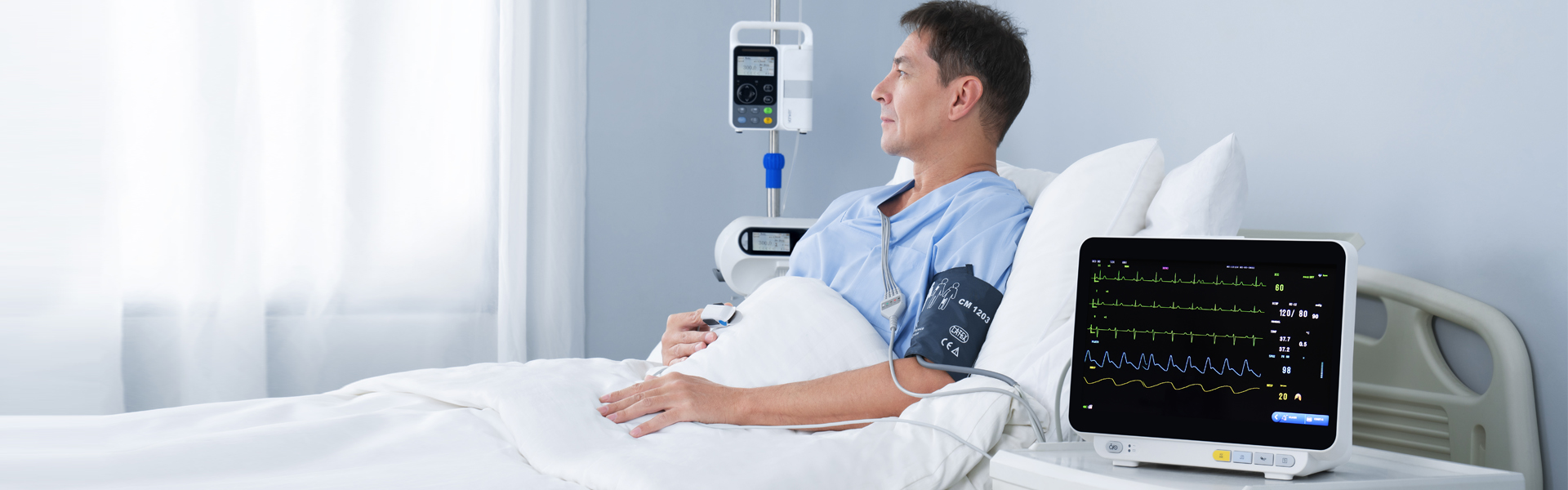

In modern healthcare environments, patient monitors play a critical role in ensuring patient safety and supporting clinical decision-making. Often described as the “guardians of vital signs,” these devices provide continuous, real-time monitoring of a patient’s physiological parameters, allowing medical staff to respond quickly to changes in condition. From intensive care units to general wards, emergency rooms, and operating theaters, patient monitors have become indispensable in hospitals worldwide.
This article offers a comprehensive overview of patient monitors, explaining what they are, how they work, the key parameters they measure, and why they are essential in today’s medical settings.
What Is a Patient Monitor?
A patient monitor is a medical device designed to continuously measure, display, and record a patient’s vital signs. By collecting data through sensors and probes attached to the patient, the monitor provides clinicians with real-time insights into the patient’s physiological status.
Unlike manual measurements that provide only periodic snapshots, patient monitors offer continuous observation. This allows healthcare professionals to detect early warning signs of deterioration, reduce the risk of medical emergencies, and improve overall patient outcomes.
Key Vital Signs Monitored
Modern patient monitors are capable of tracking multiple parameters simultaneously. The most common vital signs include:
1. Electrocardiography (ECG)
ECG monitoring measures the electrical activity of the heart. It helps clinicians assess heart rate, rhythm, and detect abnormalities such as arrhythmias, ischemia, or conduction issues. Continuous ECG monitoring is especially critical in intensive care units, cardiac wards, and during surgery.
2. Blood Oxygen Saturation (SpO₂)
SpO₂ monitoring indicates the percentage of oxygen carried by hemoglobin in the blood. Using pulse oximetry technology, patient monitors provide non-invasive, real-time oxygen saturation data, which is essential for patients with respiratory conditions, those under anesthesia, or in critical care.
3. Blood Pressure (NIBP and IBP)
Non-invasive blood pressure (NIBP) measurement is commonly used for routine monitoring, while invasive blood pressure (IBP) is used in critical care for more precise, beat-to-beat measurements. Accurate blood pressure monitoring helps clinicians evaluate cardiovascular stability and guide treatment decisions.
4. Respiratory Rate
Respiratory rate monitoring tracks how often a patient breathes per minute. Abnormal respiratory patterns can be an early indicator of respiratory distress, infection, or neurological issues.
5. Body Temperature
Continuous temperature monitoring helps detect fever, hypothermia, or temperature fluctuations caused by infection, surgery, or environmental factors.
How Patient Monitors Work
Patient monitors function through a combination of sensors, signal processing, and display systems. Sensors collect physiological signals from the patient, such as electrical heart signals or optical signals from blood flow. These signals are then processed by the monitor’s internal system, filtered for accuracy, and displayed on a clear, easy-to-read screen.
Most modern monitors also include alarm systems that alert medical staff when vital signs exceed predefined thresholds. These alarms are crucial in busy clinical environments, ensuring that critical changes are not overlooked.
Types of Patient Monitors
Patient monitors can be categorized based on their application and environment:
Bedside Patient Monitors
Typically used in ICUs and operating rooms, bedside monitors offer comprehensive, multi-parameter monitoring with large displays and advanced alarm systems.
Portable and Transport Monitors
Designed for mobility, these monitors are used during patient transport within hospitals or in ambulances. They are lightweight, battery-powered, and maintain essential monitoring functions on the move.
Post time: Dec-31-2025