
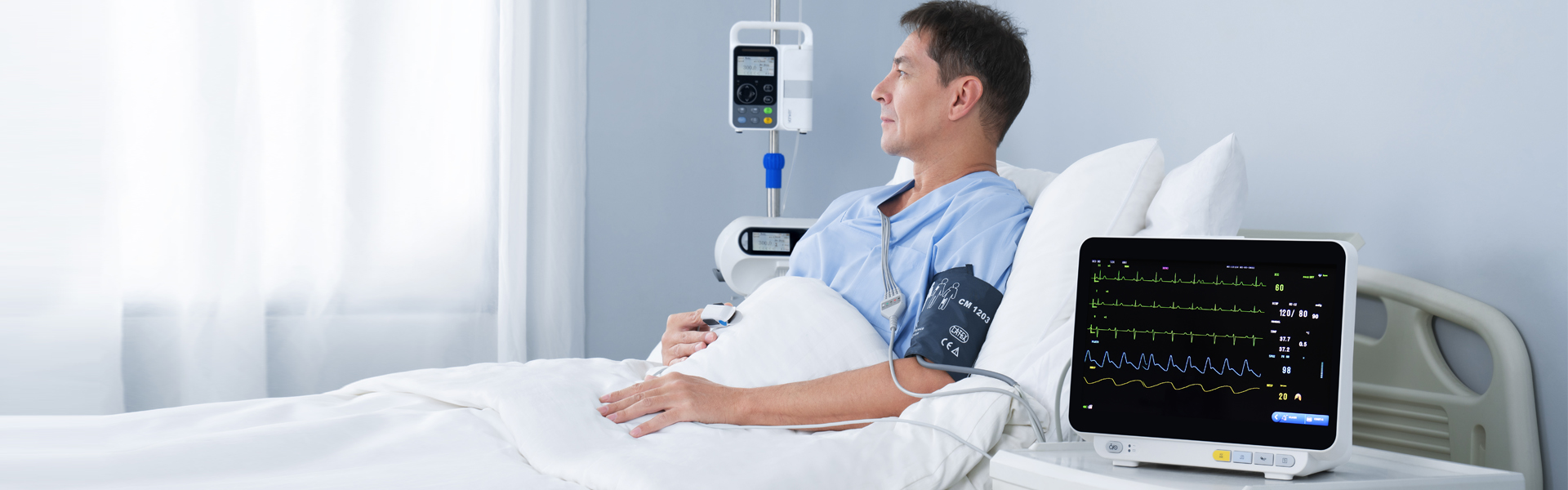

In today’s fast-paced clinical environments, ensuring patient safety while maintaining high levels of efficiency is one of the greatest challenges faced by healthcare providers. Hospitals and medical institutions must manage increasing patient volumes, complex clinical conditions, and limited medical resources. In this context, patient monitors have become essential tools that significantly enhance both patient safety and healthcare efficiency.
Often considered the technological backbone of modern clinical care, patient monitors provide continuous, real-time visibility into a patient’s physiological status. This article explores how patient monitoring systems contribute to safer care, improved clinical workflows, and better outcomes across healthcare settings.
The Role of Patient Monitors in Modern Healthcare
Patient monitors are designed to continuously track vital signs such as heart rate, blood oxygen saturation, blood pressure, respiratory rate, and body temperature. By offering uninterrupted observation, these systems allow healthcare professionals to move beyond periodic manual checks and gain a dynamic understanding of a patient’s condition.
This continuous monitoring is particularly important in high-acuity environments such as intensive care units, emergency departments, and operating rooms, where a patient’s condition can change rapidly and without warning.
Enhancing Patient Safety Through Continuous Monitoring
Early Detection of Clinical Deterioration
One of the most significant contributions of patient monitors to patient safety is the early detection of physiological deterioration. Subtle changes in heart rhythm, oxygen levels, or respiratory patterns may not be immediately visible through physical observation alone. Patient monitors can identify these changes in real time, allowing clinicians to intervene before a condition becomes critical.
Early intervention not only reduces the risk of severe complications but can also shorten recovery times and improve survival rates.
Accurate and Reliable Data Collection
Manual measurement of vital signs is subject to human error and inconsistency. Patient monitors, on the other hand, provide standardized and precise measurements using advanced sensors and signal processing technologies. This consistency improves diagnostic accuracy and supports safer clinical decision-making.
Reliable data is especially crucial for patients requiring long-term monitoring, such as those with cardiovascular or respiratory conditions.
Intelligent Alarm Systems
Modern patient monitors are equipped with intelligent alarm systems that notify healthcare staff when vital signs exceed predefined thresholds. These alarms act as an additional layer of safety, ensuring that critical changes are promptly addressed even in busy clinical environments.
Advanced alarm management features, such as customizable alarm limits and priority-based alerts, help reduce alarm fatigue while maintaining patient safety.
Reducing Medical Errors and Improving Care Quality
By providing continuous, real-time data, patient monitors help reduce the likelihood of missed warning signs and delayed responses. This reduces the risk of medical errors associated with incomplete information or delayed observation.
Furthermore, trend analysis and historical data stored by patient monitors allow clinicians to evaluate a patient’s progress over time. This supports evidence-based treatment adjustments and enhances the overall quality of care.
Improving Healthcare Efficiency and Workflow
Automation of Routine Monitoring Tasks
Patient monitors automate the collection and recording of vital signs, significantly reducing the need for frequent manual checks. This automation frees up valuable time for nurses and physicians, allowing them to focus on direct patient care, communication, and complex clinical tasks.
In large hospitals, this time-saving effect can translate into improved staff productivity and better resource allocation.
Streamlined Clinical Decision-Making
With all vital parameters displayed clearly on a single screen, clinicians can quickly assess a patient’s condition and make informed decisions. The ability to view multiple parameters simultaneously reduces the time required to gather information from different sources.
Clear visual displays, trend graphs, and color-coded alerts further support fast and accurate clinical assessments.
Integration with Hospital Information Systems
Many modern patient monitors can integrate seamlessly with hospital information systems (HIS) and electronic medical records (EMR). Through wired or wireless connectivity, monitoring data can be automatically transmitted and stored in patient records.
This integration eliminates redundant data entry, reduces documentation errors, and ensures that patient information is readily available to authorized healthcare professionals across departments.
Post time: Dec-31-2025