
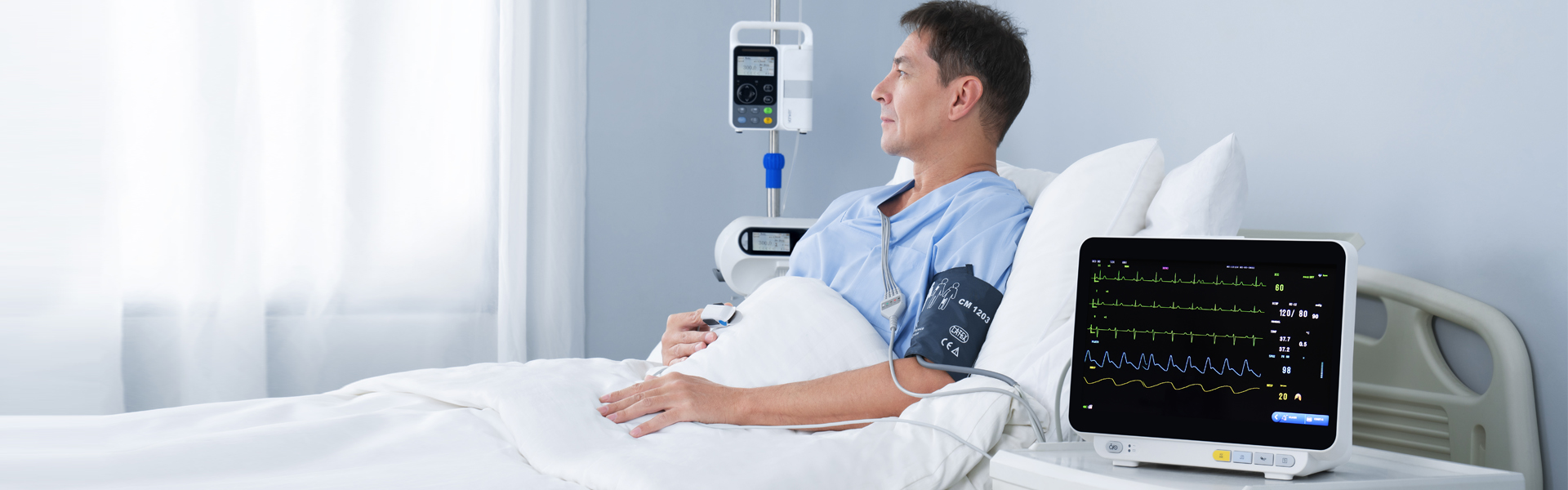

In today’s hospital environment, patient safety is a top priority, especially in general wards and long-term care units where elderly and high-risk patients are treated. One of the most important technologies supporting safe and efficient care is the bedside patient monitor.
Bedside patient monitors provide continuous, real-time observation of vital signs such as heart rate, blood pressure, oxygen saturation, respiratory rate, and temperature. Unlike intermittent manual measurements, continuous monitoring allows healthcare professionals to detect subtle changes in a patient’s condition before they develop into serious complications.
Continuous Monitoring Reduces Clinical Risk
Many clinical incidents occur not because warning signs are absent, but because they are not detected in time. For elderly patients, physiological changes can happen quickly and without obvious symptoms. A gradual drop in oxygen saturation or an abnormal heart rhythm may go unnoticed during routine checks, especially in busy hospital wards.
With bedside patient monitors, vital sign trends are displayed clearly and continuously. Alarm systems notify medical staff immediately when values exceed preset limits, allowing timely intervention. This early detection plays a critical role in preventing adverse events, reducing emergency situations, and improving overall patient outcomes.
Improving Workflow for Medical Staff
In modern hospitals, nurses and clinicians are responsible for managing multiple patients simultaneously. Bedside patient monitors significantly improve workflow efficiency by reducing the need for frequent manual measurements.
Instead of repeatedly checking vital signs using separate devices, healthcare professionals can access all key data from a single monitor. This centralized information supports faster clinical assessments during ward rounds and allows staff to focus more on direct patient care, communication, and treatment planning.
Clear interfaces and easy-to-read displays are especially important in high-pressure environments. Well-designed patient monitors enable quick interpretation of data, even during emergencies or night shifts when staffing levels may be limited.
Enhancing Patient Comfort and Experience
Patient comfort is an often overlooked but essential part of hospital care. Frequent interruptions for manual measurements can disturb sleep, increase anxiety, and slow recovery—particularly for elderly patients.
Bedside monitoring reduces unnecessary disturbances while maintaining continuous observation. Patients can rest more comfortably knowing that their condition is being monitored at all times. This sense of security contributes to better cooperation with treatment and a more positive hospital experience.
For families, visible monitoring equipment also provides reassurance. Seeing vital signs displayed clearly at the bedside helps build trust in the quality of care being delivered.
Supporting Clinical Decision-Making
Patient monitors do more than display numbers; they provide valuable data that supports clinical decisions. Trend analysis allows clinicians to evaluate how a patient responds to treatment over time, adjust medication, or plan further examinations.
In multi-bed wards, monitoring systems help standardize patient observation, ensuring consistent care regardless of staff changes or shift rotations. Reliable monitoring data forms an important foundation for evidence-based medical decisions.
Yonker’s Approach to Patient Monitoring
Yonker patient monitors are designed to support daily clinical use in hospitals and care facilities. With stable performance, intuitive operation, and clear visualization of vital signs, Yonker monitoring solutions help medical professionals work more efficiently while maintaining a high standard of patient care.
As healthcare systems continue to evolve, bedside patient monitoring will remain an essential tool in improving safety, efficiency, and patient-centered care in modern hospitals.
Post time: Jan-27-2026